At a glance
Agency: Fort Collins Police Services
Population served: Approximately 176,000 people
Sworn staff: 236 sworn personnel and 145 professional staff
Coverage area: About 58 square miles across the city of Fort Collins, Colorado
Key solutions: Axon Draft One, Axon Body 4, Axon Evidence
About the Agency
Fort Collins Police Services serves a growing Northern Colorado community located along the Front Range. Its 236 sworn officers work across a varied urban environment that includes historic downtown districts, residential neighborhoods, commercial areas, and the Colorado State University campus. The agency is also supported by 145 professional staff who help meet the city’s public-safety needs.
 The Challenge
As Fort Collins has grown, so has the work required to support investigations, maintain accurate records, and move cases through the city’s criminal justice system. Like many agencies, one of the primary workload demands was report writing for the Fort Collins Police.
Officers need time to write clear, complete accounts of incidents, but every minute spent typing is a minute not spent on patrol or engaging with the community.
We have this joke internally where we say, ‘It's just another five minutes.’ When you start adding up those five minutes spent on administrative tasks, it becomes 50 minutes, two hours, a day, a week. Hours and hours every year.
Additionally, report writing quality varied significantly across the agency, as some officers produced excellent narratives while others communicated effectively in the field but struggled to translate that into written documentation. Closing that gap often required additional coaching and mentoring hours from supervisors.
Fort Collins Police Services wanted to reduce administrative burden across the agency to free up time and boost morale, without compromising the quality or accuracy of its reports. As it considered AI-assisted report writing, the agency recognized that officers, justice-system partners, and the community would have questions about how the technology would be used. Fort Collins therefore needed tangible data to show whether AI technology could save time on reports without compromising report quality or established standards.
The Solution
Fort Collins Police Services began a data-driven evaluation of Draft One in April 2024.They tested the AI tool among 50 to 75 officers who represented a range of report-writing styles and attitudes. Participating officers completed narratives using their existing workflow and then with Draft One.
With Draft One, officers use audio transcripts available in Axon Evidence to generate initial report narratives. They then review, edit, verify, and approve each report before it enters the records management system.
 The agency compared the report outputs side-by-side and, based on positive results, decided to adopt Draft One. As they rolled out Draft One across report types, Fort Collins Police Services added a single line to its agency policy specifying that, regardless of the technology used to prepare a draft, the officer is responsible for the content and quality of the final report.
Draft One creates a draft, but I have to review every single thing in there. I have to check for accuracy, content, and be able to make positive changes, negative changes, add, subtract, modify. And then I have to sign an acknowledgement at the bottom that says, “I hereby acknowledge this is true and accurate to the best of my recollection.’
The agency also proactively demonstrated the tool for key stakeholders such as city leadership and the media to establish a shared understanding of how Draft One supports, rather than replaces, officer judgment.
Results
Narrative-writing time dropped from 27 to 8 minutes
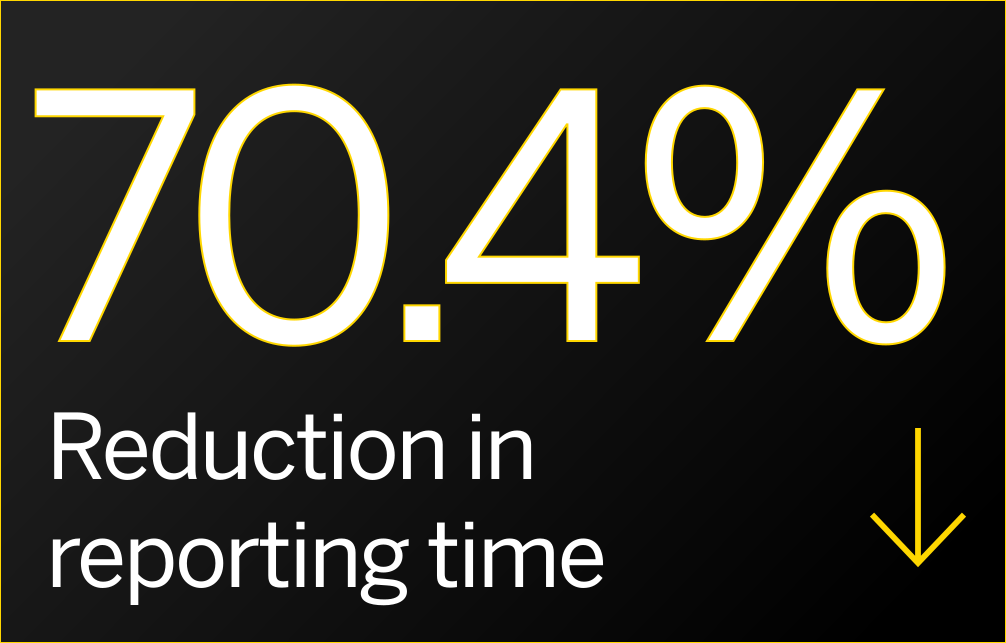
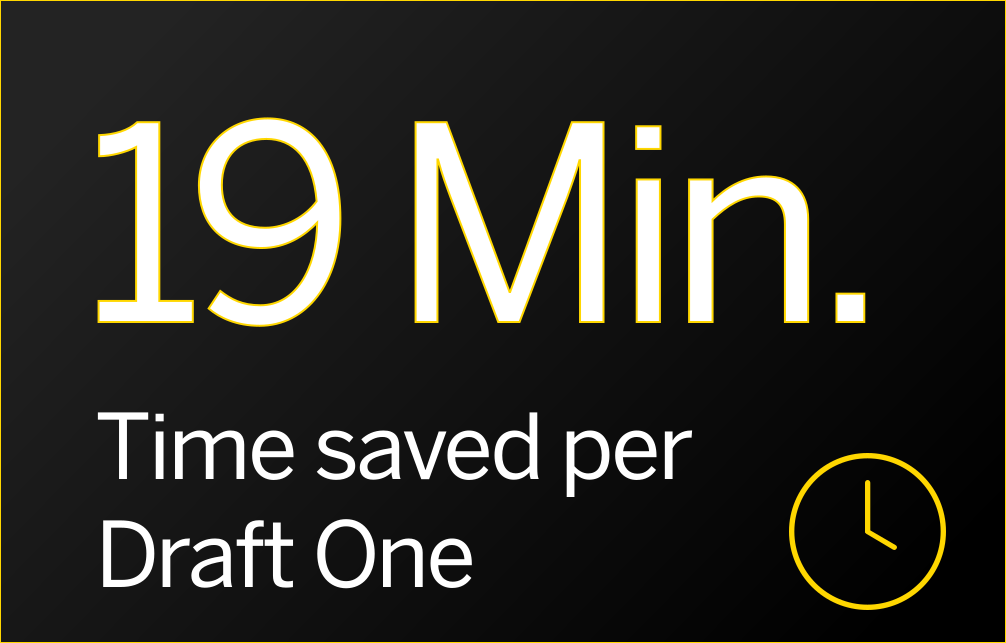
The agency’s evaluation found that officers using traditional dictation or typing in Microsoft Word spent an average of 27 minutes completing the narrative portion of a report. With Axon Draft One, that average fell to 8 minutes, resulting in a 70.4% reduction and 19 minutes saved per Draft One narrative. These figures concern narrative writing, not necessarily the entire report-completion process.
Using Draft One, we found huge time savings. We really couldn’t believe it. I had to go back and double-check my math.
By the numbers: adoption, time savings, and value
In 2024, FCPS completed 49,473 reports and then completed 49,462 in 2025. Through October 15, 2026, FCPS recorded 39,423 reports; a simple year-to-date run-rate projects approximately 49,963 for the full year.
Since the initial implementation of Axon Draft One in 2024, active utilization has grown substantially. The number of users submitting Draft One reports increased from 82 in 2024 to 168 in 2025 and 190 through October 15, 2026, representing a 132% increase in active users.
During the same period, annual Draft One report production increased from 4,665 in 2024 to 8,392 in 2025, with 9,835 reports already submitted in 2026. Draft One now accounts for approximately one-quarter of all agency reports, demonstrating continued expansion of AI-assisted report writing.
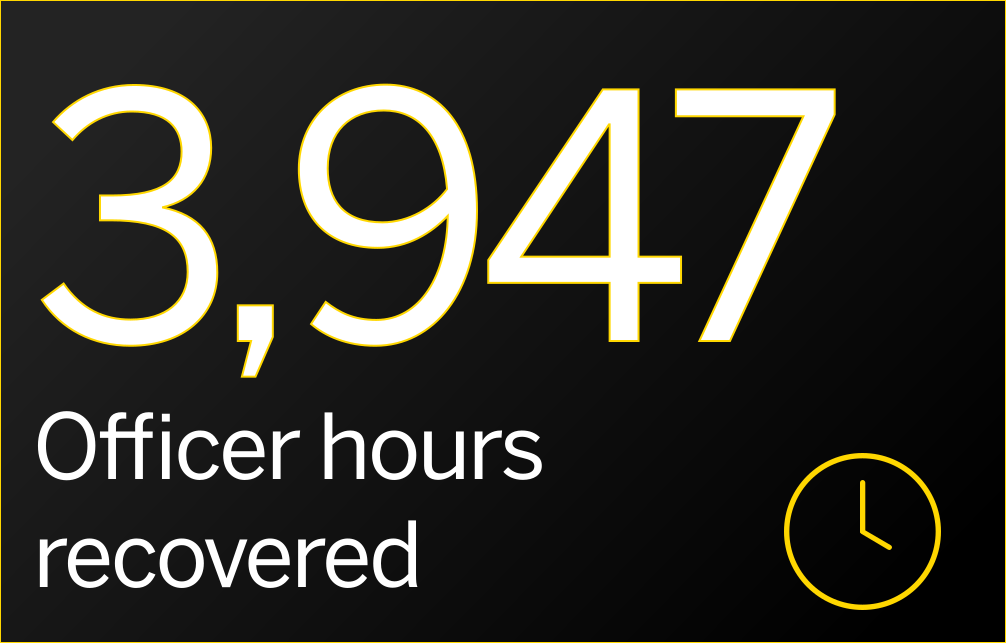
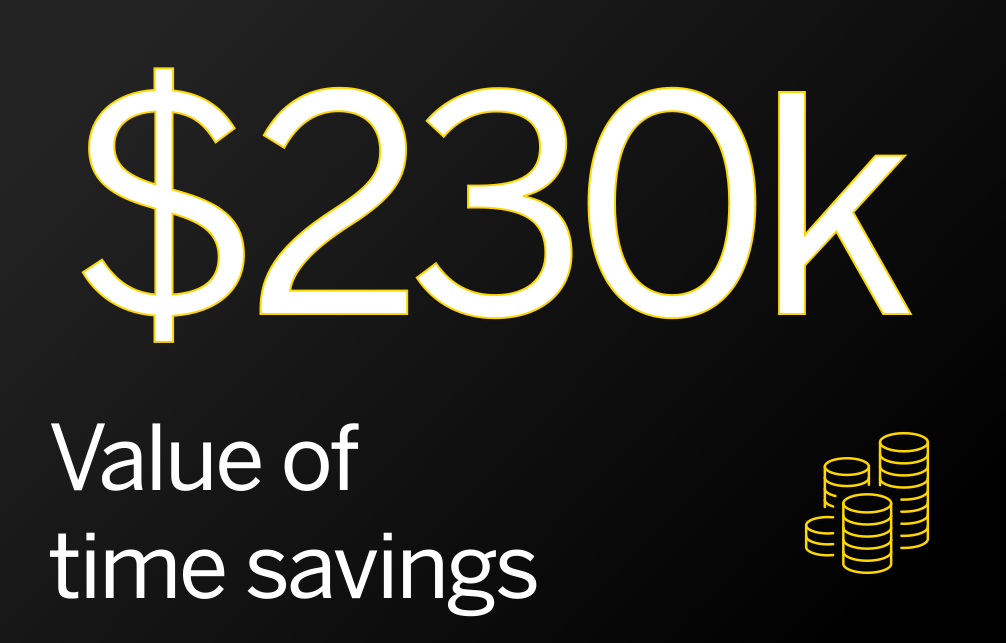
12,465 narratives are projected to be completed with Draft One in 2026, resulting in approximately 3,947 officer hours being recovered. At $58.41 per hour, the time savings carries a financial value of approximately $230,559.
For Fort Collins, those gains represent time officers can redirect to patrol, investigations, and serving the community.
Year | Total Reports completed | Draft One Reports | Hours Recovered | Time Value |
2024 | 49,473 | 4,665 | 1,477.25 | $86,286.17 |
2025 | 49,462 | 8,392 | 2,657.47 | $155,222.63 |
2026 (YTD) | 39,423 | 9,835 | 3,114.42 | $181,913.08 |
2026 (projected) | 49,963 | 12,465 | 3,947.25 | $230,558.86 |
*Assumptions in the table above: 19 minutes of narrative-writing time saved per Draft One report; average officer pay of $58.41/hour. These are estimates of recovered officer productivity, not reductions in actual payroll expenditures. Full-year 2026 estimates are projections.
More accurate, complete reports
The side-by-side review revealed that Draft One could help officers identify relevant details from available audio that might otherwise be missed.
In one instance, an officer questioned why a draft referenced a gray Toyota Corolla. After reviewing the body-worn camera footage, the team confirmed the vehicle had been mentioned during the incident. The detail was accurate, but the officer had not recalled it.
 Draft One provides an initial narrative draft that officers review and edit, helping them capture relevant context while retaining control of the final report. The tool will automatically summarize profanity or heated exchanges, but officers can add direct language where an exact quote is needed for clarity.
Relief that supports officer retention
The benefits of Draft One extend beyond stronger reports themselves. Younger shared that he had an officer who was considering leaving law enforcement because of the job’s administrative burdens.
After using this, you have changed the direction of my career. I was thinking about doing something else, and now I’m not.
Reducing the burden of report writing can help make day-to-day police work more sustainable for current officers and give prospective hires another reason to consider the agency.
Fast adoption and easy integration
Fort Collins deployed Draft One without dedicated support from its IT team or formal classroom training. The agency created a short instructional video covering how to use Draft One and best practices, allowing officers to quickly begin using the tool.
This is so intuitive and so easy that literally after they watch it being used on the screen, they’re out using it.
The agency’s existing Axon ecosystem helped make the rollout straightforward. Draft One works with eligible audio already available in Axon Evidence, including recordings from Axon Body 3 and Axon Body 4 cameras, recorded interviews, and 911 calls. Officers can select multiple relevant recordings from an incident, exclude irrelevant footage, and, where agency settings allow, incorporate recordings from other responding officers into their draft.
Conclusion and Looking Ahead
By turning information already captured in the field into a report-writing starting point, Draft One has helped officers at Fort Collins Police Services spend less time building narratives from scratch and more time reviewing, refining, and approving final reports.
With average narrative-writing time reduced by 70.4%, Sergeant Bob Younger expects the role of Draft One in law enforcement to continue expanding. He offers clear advice to agencies considering the technology.
I’m just going to let the cat out of the bag: this works right out of the chute. It’s one of the simplest things to implement and use in your organization.
Next, Fort Collins Police Services plans to coach officers on how to effectively use the narration workflow in Draft One during shift briefings, helping them continue to get the most value from the tool.
Want to dig deeper? Learn about the Fort Collins methodology for tracking time savings and their "Keys to Success" for implementing Draft One during Sergeant Younger's presentation at Axon Week. You can view the recording here >